

Quick answer: A rumbling water heater usually means mineral sediment has settled at the bottom of the tank. That layer takes up room meant for hot water and slows recovery, so the tank runs lukewarm when guests shower back to back. A flush helps a healthy tank. Rusty water, loud popping, or a leak means call a plumber now.
If your water heater has been rumbling, that is not holiday music. A tank that keeps up on a normal Tuesday can run out halfway through the second shower once the guest rooms fill up. Add the dishwasher after every meal and a few loads of guest towels, and Thanksgiving week asks a lot of your water heater.
The good news: most hot-water trouble gives warning signs first, and five days out you still have time to deal with them on your schedule instead of Thursday morning.
Why Water Heaters Rumble
Every time your heater warms a fresh tank of water, some of the minerals dissolved in that water settle out and sink to the bottom. Over months and years, that layer of sediment builds up over the burner (gas) or around the lower heating element (electric). Water trapped under the sediment boils in small bursts, and that is the rumbling or popping you hear.
Sediment causes three problems right when you need hot water most:
- Less hot water. Sediment takes up space that should hold hot water.
- Slower recovery. The heat has to work through the sediment layer, so the tank takes longer to reheat between showers.
- Extra wear. A tank that runs longer and hotter at the bottom works harder every cycle.
What About Miami’s Water?
Most homes in Miami-Dade get their water from the Biscayne Aquifer. In its 2025 Water Quality Report, the Miami-Dade Water and Sewer Department says water from the Alexander Orr, Jr. plant (which generally serves customers south of SW 8 Street) “receives lime treatment to reduce hardness,” and the Preston plant uses “enhanced softening.”
The report does not publish a hardness number, so we won’t quote one. Whatever minerals reach your tap are what settle in your tank, and your water source and whether you have a softener both make a difference. A simple hardness test strip from the hardware store tells you where your home stands. Either way, sediment buildup is a common reason a tank starts rumbling and running short on hot water.
Warning Signs to Check This Weekend
Walk over to your water heater and look and listen for:
- Rumbling, popping, or crackling while it heats.
- Hot water that runs out faster than it used to, or showers that turn lukewarm.
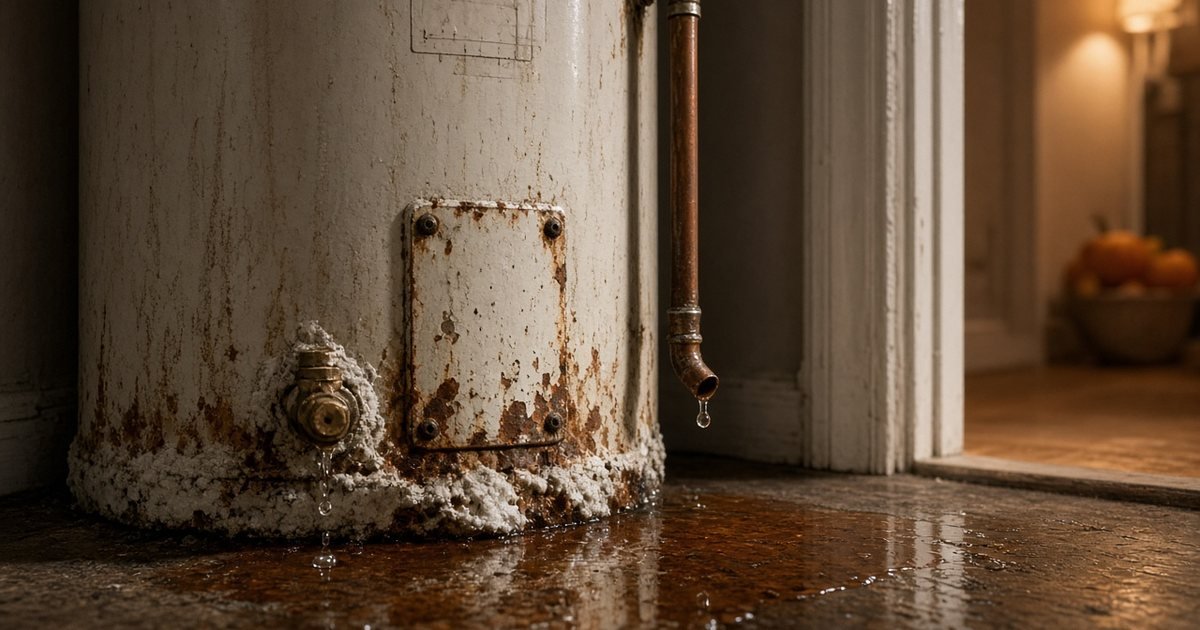
- Rusty or brown hot water, which can point to corrosion inside the tank.
- Water on the floor or a damp pan under the tank.
- Water dripping from the relief valve’s discharge pipe (the pipe on the side or top of the tank).
- A rotten-egg smell from the hot water only.
- Age. Check the label or serial number; an older tank that has never been flushed deserves a closer look.
Pro Tip: Take a quick photo of the label on the tank (brand, model, gallons, and age). It speeds up any call with a plumber.
Don’t Wait on These
A flush helps a healthy tank. It will not fix a failing one. Call a licensed plumber before Thursday if you see:
- Rusty water from the hot side only
- Loud popping along with little or no hot water
- Any leak at the tank, the fittings, or the relief valve
Holiday use is usually when people first notice these problems. A leaking tank in a garage or utility closet is much easier to deal with on a Monday than in the middle of Thanksgiving dinner.
Flushing Before Company Arrives
A flush drains water out of the tank so the loose sediment goes with it. The U.S. Department of Energy’s water heating fact sheet lists routine maintenance as “flushing a quart of water from the storage tank every three months, checking the temperature and pressure relief valve every six months, and inspecting the anode rod every three to four years.” Your owner’s manual has the exact schedule for your model.
If you plan to do it yourself, follow the manual and keep these safety points in mind:
- Shut off the power or gas first. An electric element can burn out if it heats an empty tank.
- The water comes out hot enough to burn. Let it cool and run the hose somewhere safe.
- Don’t force an old drain valve. On a tank that has never been flushed, the valve can stick or start leaking once it is opened.
- Refill the tank completely before you turn the power or gas back on.
If the tank is older, tucked in a tight closet, or the valve won’t cooperate, that is the moment to call us. When we flush a tank, we also check for leaks and inspect the anode rod and other components.
Getting More Hot Water Out of the Holiday Week
- Stagger showers. Give the tank time to recover between showers when you can.
- Run the dishwasher and laundry at off-peak times, not during the morning shower rush.
- Don’t crank the thermostat. The U.S. Consumer Product Safety Commission urges lowering water heaters to 120°F and notes that most tap-water scald injuries happen to older adults and children under five, which describes many Thanksgiving guest lists.
- Have a tankless heater? Tankless units don’t store water, so sediment works differently: they’re limited by flow, and scale can build inside the unit. Check the manual for its descaling schedule.
While you’re getting the house ready, take a look at the drains, too. Our guide to multiple slow drains before Thanksgiving covers what to watch for.
How Atlas Plumbing Helps
Atlas Plumbing Inc. has served Coral Gables and Miami homes since 1994 (Florida license CFC1426451). Our water heater repair service covers:
- Diagnosing the problem, from noises and lukewarm water to leaks and rusty water
- Flushing the tank to remove sediment
- Checking for leaks and inspecting the anode rod
- Repair or replacement when the tank has reached the end of its life
We serve Coral Gables, Miami, South Miami, Kendall, Pinecrest, Coconut Grove, Westchester, Doral, Palmetto Bay, Key Biscayne, and Bal Harbour for residential plumbing and commercial plumbing customers. For a whole-house walk-through, try our 20-minute Coral Gables plumbing checklist.
Frequently Asked Questions
Why is my water heater rumbling?
Rumbling usually means mineral sediment has built up at the bottom of the tank. Water trapped under the sediment boils in small bursts as the heater runs. Flushing the tank often helps, but rumbling together with leaks or rusty water calls for a plumber.
Does Miami have hard water?
Miami-Dade’s main supply comes from the Biscayne Aquifer, and the county’s 2025 Water Quality Report says its plants use lime treatment and softening to reduce hardness. The report doesn’t list a hardness number, so a home test strip is the easiest way to check your own water.
How often should I flush my water heater in Florida?
Follow your owner’s manual, because intervals vary by brand. U.S. Department of Energy guidance lists flushing a quart of water from the tank every three months as routine maintenance. Tanks that rumble or run short may need a full flush sooner.
Should I turn up my water heater for Thanksgiving guests?
No. A higher setting raises the risk of scalding, especially for children and older relatives. The U.S. Consumer Product Safety Commission urges a setting of 120°F. Staggering showers and running appliances at off-peak times is the safer fix.
Is it safe to use a water heater that is leaking or making rusty water?
Have it checked right away. A leak, rusty hot water, or water from the relief valve can mean corrosion or a pressure problem, and holiday use can make it worse. Shut off the water to the heater if it is actively leaking and call a licensed plumber.
Need a Water Heater Check in Coral Gables or Miami?
Rumbling, lukewarm showers, or rusty water? Get it checked before your company arrives.
- 📞 Call Us: (305) 301-7274
- 🕘 Hours: Monday–Saturday, 7 AM–5 PM (closed Sunday). We’re open Thanksgiving Day, Thu., Nov. 26, 7 AM–12 PM, and Black Friday, 7 AM–5 PM.
- 🚐 We offer same-day visits when our schedule allows.
- 🌐 Schedule Service Online: Request a free estimate
- 🛠️ Licensed Florida plumbing contractor, CFC1426451. Serving Coral Gables and Miami since 1994.
Follow us on Facebook for daily holiday plumbing tips.

Leave a Reply