

Most major plumbing disasters don’t happen overnight. In many cases, the expensive emergency repair that floods a kitchen, damages hardwood floors, or shuts down a bathroom started with a tiny warning sign months earlier.
A slow drip under a sink.
A toilet that quietly keeps running.
A hidden leak slowly increasing your water bill.
For homeowners in Coral Gables, plumbing issues can become even more serious because many homes in the area are older and contain aging pipes, mature tree roots, and infrastructure exposed to decades of South Florida humidity and heavy rain.
That’s why every homeowner should complete a simple annual plumbing inspection.
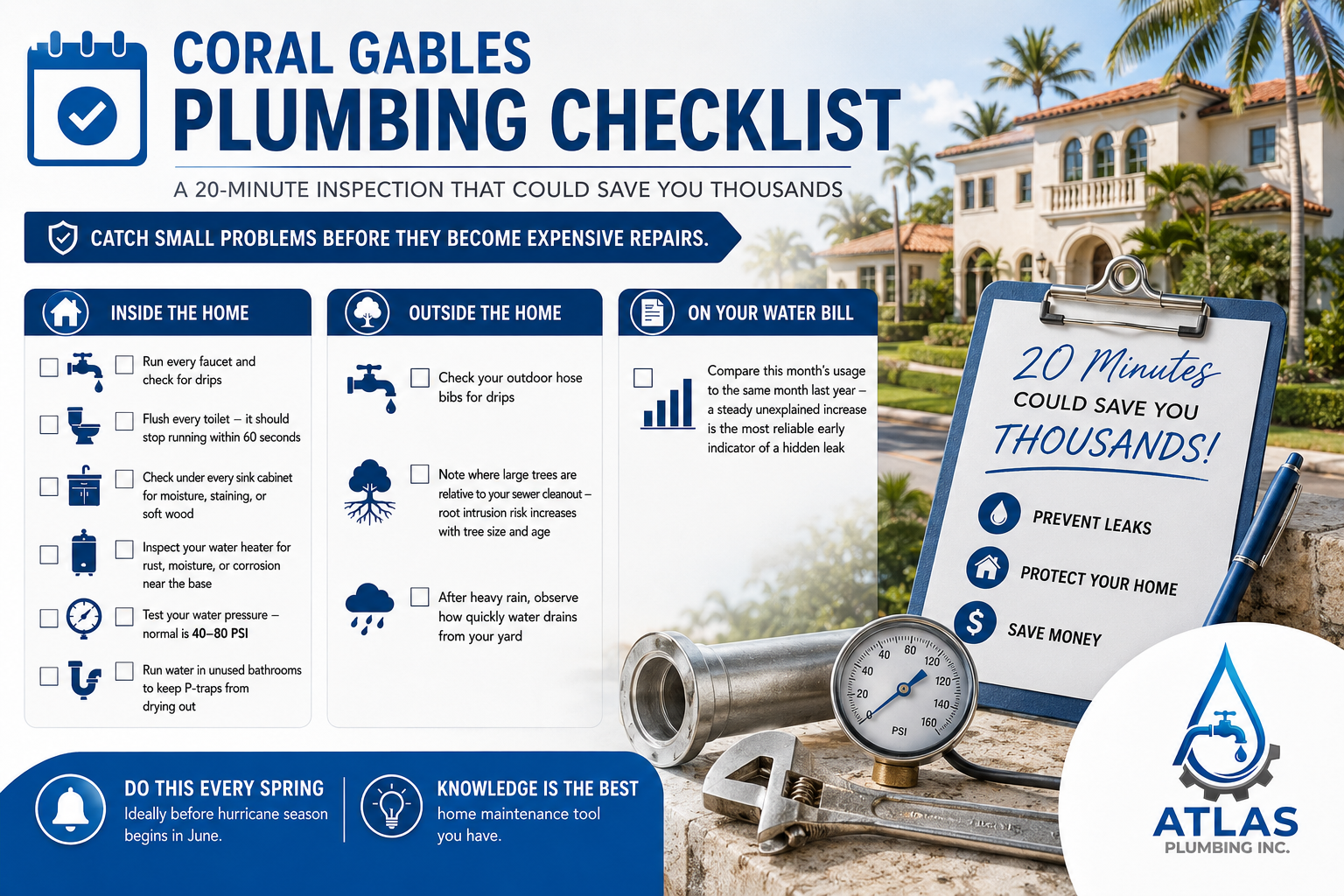
This 20-minute Coral Gables plumbing checklist can help you catch small problems before they become costly repairs.
Why Preventative Plumbing Inspections Matter in Coral Gables
Coral Gables homes are known for their historic charm, beautiful landscaping, and mature trees. But those same features can create unique plumbing challenges.
Older homes throughout Coral Gables often deal with:
- Aging cast iron drain lines
- Sewer pipe corrosion
- Tree root intrusion
- High humidity-related moisture damage
- Heavy rain drainage problems
- Water pressure fluctuations
- Slab leaks and hidden pipe deterioration
The earlier these issues are detected, the less damage they typically cause.
A small leak today can become:
- Mold growth behind walls
- Rotting cabinetry
- Foundation damage
- Sewer backups
- Major water damage
- Expensive emergency plumbing repairs
Routine inspections are one of the smartest ways to protect your property value and avoid surprise plumbing emergencies.
Your Annual Coral Gables Plumbing Checklist
Inside the Home
1. Run Every Faucet and Check for Drips
Turn on every faucet in the house, including:
- Kitchen sinks
- Bathroom sinks
- Utility sinks
- Wet bars
- Outdoor-access sinks
After shutting them off, watch closely for dripping water.
Even a slow drip can waste thousands of gallons annually and may indicate:
- Worn washers
- Failing cartridges
- Excessive water pressure
- Corrosion inside fixtures
If you notice reduced water flow, discoloration, or sputtering, it could also signal pipe buildup or hidden plumbing deterioration.
2. Flush Every Toilet
Every toilet should stop running within about 60 seconds after flushing.
If it continues running longer, you may have:
- A worn flapper
- A failing fill valve
- Internal leaks wasting water continuously
Running toilets are one of the most common causes of high water bills in Coral Gables homes.
A toilet leak can waste hundreds of gallons per day without homeowners realizing it.
3. Check Under Sink Cabinets
Open every cabinet beneath sinks and inspect for:
- Moisture
- Water stains
- Soft wood
- Musty odors
- Bubbling paint
- Warped cabinetry
These are early signs of hidden leaks.
Small plumbing leaks often stay unnoticed because they occur inside cabinets or behind stored items. Over time, this trapped moisture can create mold growth and structural damage.
4. Inspect Your Water Heater
Look around the base of your water heater carefully.
Watch for:
- Rust
- Corrosion
- Water pooling
- Mineral buildup
- Moisture near fittings
In South Florida, water heaters work hard year-round, and corrosion can develop faster due to humidity and mineral content.
Ignoring early warning signs can eventually lead to complete tank failure and major flooding.
If your water heater is over 8–12 years old, annual inspections become even more important.
5. Test Your Water Pressure
Healthy residential water pressure typically falls between:
40 PSI≤P≤80 PSI40\text{ PSI} \leq P \leq 80\text{ PSI}
Pressure that is too high can:
- Damage pipes
- Wear out appliances
- Increase leak risk
- Stress plumbing fixtures
Pressure that is too low may indicate:
- Pipe blockages
- Hidden leaks
- Corroded lines
- Municipal supply issues
A simple pressure gauge connected to a hose bib can quickly help identify problems.
6. Run Water in Unused Bathrooms
Guest bathrooms and rarely used sinks should still have water run through them periodically.
Why?
Because plumbing traps (called P-traps) hold water that blocks sewer gases from entering the home.
When drains sit unused for long periods:
- Water evaporates
- Sewer odors can enter the house
- Bacteria and unpleasant smells may develop
Running water for a minute helps keep those traps functioning properly.
Outside the Home
7. Check Outdoor Hose Bibs
Outdoor faucets are frequently overlooked.
Inspect for:
- Dripping
- Cracks
- Loose fittings
- Water pooling nearby
Small exterior leaks can quietly waste significant amounts of water over time.
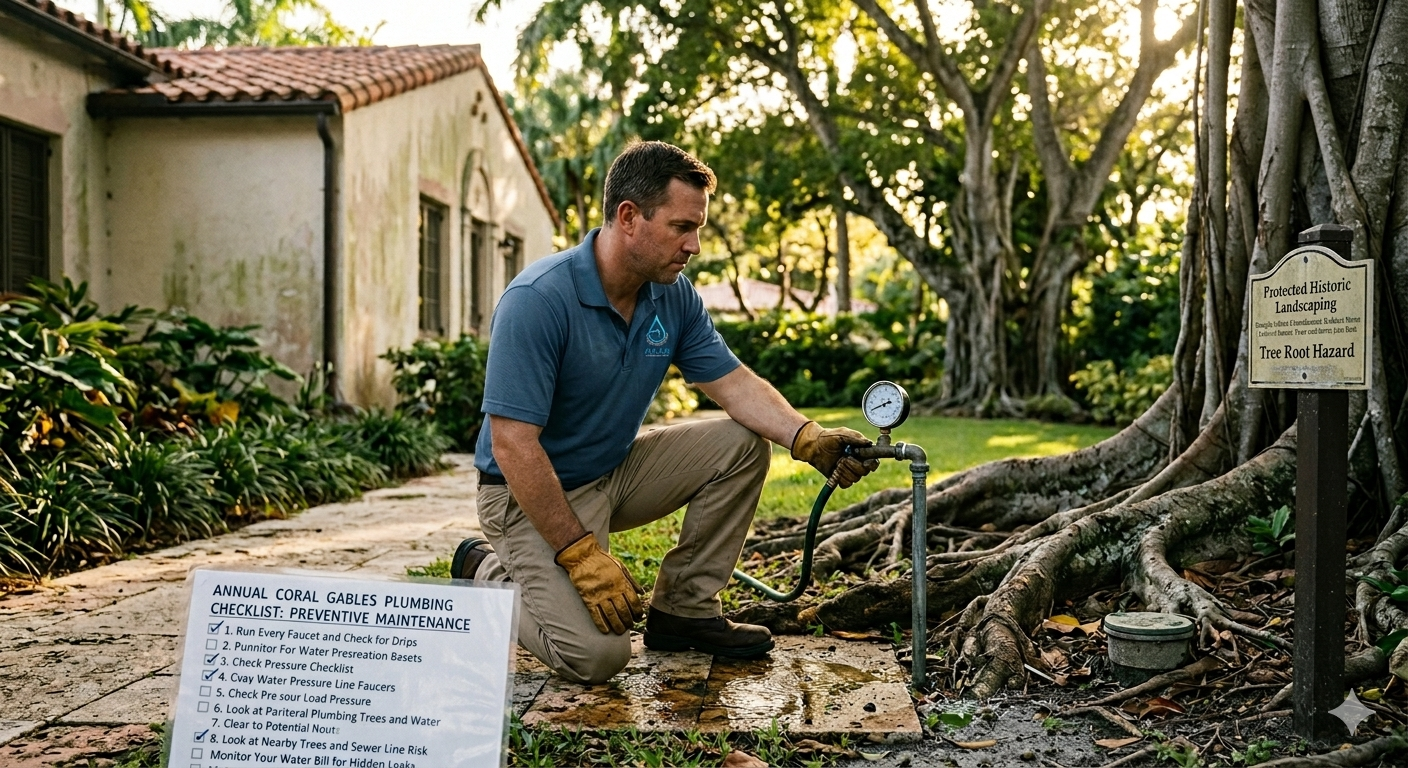
8. Look at Nearby Trees and Sewer Line Risk
Coral Gables is famous for beautiful mature trees, but tree roots are one of the leading causes of sewer line damage in South Florida.
Roots naturally seek moisture and can infiltrate tiny cracks in sewer pipes.
Over time, roots can:
- Block drains
- Break sewer lines
- Cause backups
- Collapse aging pipes
If you have large trees near your sewer cleanout or main line path, your home may face elevated root intrusion risk.
Common warning signs include:
- Slow drains
- Frequent backups
- Gurgling sounds
- Sewage odors
- Wet patches in the yard
9. Observe Yard Drainage After Heavy Rain
South Florida storms can quickly expose drainage issues.
After heavy rain:
- Check for standing water
- Watch how quickly water drains
- Look for soggy patches near the foundation
Poor drainage can place extra pressure on underground plumbing systems and increase the risk of foundation or sewer complications.
Monitor Your Water Bill for Hidden Leaks
One of the most reliable ways to detect hidden plumbing problems is by reviewing your monthly water bill.
Compare:
- Current usage
- Previous months
- The same month last year
An unexplained increase often signals:
- Hidden leaks
- Running toilets
- Underground pipe damage
- Irrigation issues
Many homeowners discover slab leaks only after noticing a steadily rising water bill.
Why Spring Is the Best Time for a Plumbing Inspection
In Coral Gables, spring is the ideal time for preventative plumbing maintenance because it allows homeowners to prepare before:
- Summer storms
- Hurricane season
- Heavy rainfall
- Increased water usage
Catching problems early can help prevent emergencies during severe weather conditions.
Set a yearly reminder to complete this checklist before June whenever possible.
Final Thoughts on Coral Gables Plumbing Maintenance
The best plumbing repairs are the ones you never have to make.
Most expensive plumbing emergencies begin with small warning signs that homeowners either miss or ignore. A quick annual inspection can help identify hidden issues early, reduce repair costs, and protect your home from serious water damage.
For homeowners in South Florida, especially those living in older properties, preventative Coral Gables plumbing maintenance is one of the smartest investments you can make.
Leave a Reply